
5 Tips Before Riding This October
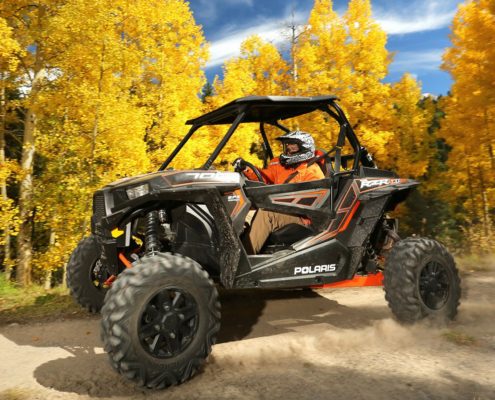
It's finally that time of year, fall! If you're like us and you're from the south you know exactly what I mean. During the summer months it is almost too hot to ride your Motorcycle, Atv, Dirtbike, or Side by Side. Now that it is October the cooler weather is finally here and it's time to ride! Also, if you're like us, your machines have been sitting in the garage all summer waiting for this moment. It's a good idea to give them a once over and a service before putting them to the test. Here are a few points and things I recommend doing before pulling them out.
1) Check tire pressures
It's one of the more overlooked things when servicing your Atv, Dirtbike, Side by Side, or Motorcycle but it is one of the most important things you can do. Improper tire pressures can cause a slew of issues. Uneven tire ware, handlebars tweaked, hard or heavy turning, less performance, and if severely low you can damage you wheel or rim! You can check the side of your tires and there will be a PSI recommended by the tire manufacturer. Make sure your tires are always inflated to that PSI and you'll have no issues. Here is what the sidewalls look like on most tires to let you know what PSI your tires should be filled to.

2) Check your air filter
I cannot stress this enough. When your ATV, Motorcycle, UTV, Dirtbike, or Snowmobile is sitting for quite some time alot of things can happen with the air filter. If it was left dirty and in high heat it could have started deteriorating. Sucking in the pieces of foam that fell off of your air filter could be detrimental to your engine. If you machine sits in a barn or an outdoor shed, wildlife LOVES airfilter boxes. Mice in particular. They love to make nests and have babies in air filter boxes. I'm sure you can imagine how this is terrible for your engine. At the very least, your machine runs best with a new air filter. It should be common practice to clean your air filter every couple of rides if possible. You can find a replacement air filter for your machine HERE!
3) Check Oil levels/Change oil
If it has been a while since you've last changed your oil, go ahead and do it. You cannot change your oil enough in these machines. They ar enot like your car where they are ran at a low RPM. They are used and abused (most likely) and most machines only use a small amount of oil, normally between 1.5 - 3 quarts. It doesn't take long for the oil to get dirty. Do you and your machine a favor and start off the season with fresh oil and a filter!
4) Replace/Treat fuel
Now obviously it's common practice to treat your fuel with some sort of chemical when winterizing your vehicle to inhibit any problems come spring time. Most people don't think to do this at the end of spring when your machine is going to sit for 3 or 4 months over summer. The same problems can happen in summer as winter! I recommend running down to your local automotive/hardware/tool shop and getting a cheap fuel siphon and just getting all of the old fuel out. It only costs a couple bucks to fill it up anyway. Old fuel can cause havoc to your fuel system and cause alot more headache than its worth. Just siphon it out and start fresh! Something like this fuel siphon should be all you need.

5) Load test battery (if applicable)
This is just a precautionary thing, just a helpful hint. Sometimes batteries get weak from sitting. It may start your machine the first few times, but could weaken over time. The last thing you want is to be out 2 miles deep in the woods or trails and not be able to start your machine because of a dead battery. Load test your battery before pulling it out for the first time! If you don't have a load tester you can use a volt meter. Put it on the VDC setting and touch red to + and black to -, you should see roughly 12.1 - 12.6 VDC (give or take a couple tenths). Anything lower than that charge your battery then start again. With the volt meter connected to your battery, turn your key to on and press the start button. Watch the voltage, if it drops below roughly 11 volts you may have a problem. If it drops below 10 you definitely have a problem. You can try charging the battery and try again, or just replace it!
These are just a few tips to get you going. A small checklist you may not be thinking about, but definitely some important things there. Check out our OEM Parts Finder if you need anything to get you going!
